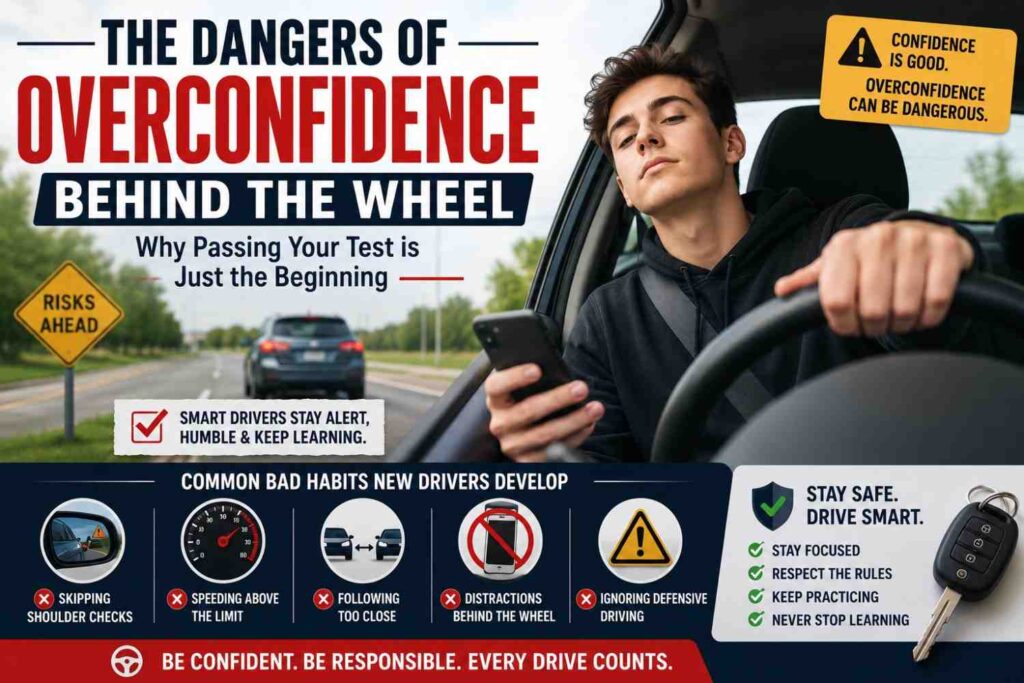
Why Passing Your Driving Test Is Just the Beginning
Passing your G2 or G road test is an exciting milestone. After weeks or months of practice, you’ve finally earned the privilege of driving independently. As a driving instructor, I enjoy seeing my students celebrate this achievement because I know how much hard work it takes.
However, I also remind every new driver of one important fact: passing your driving test doesn’t mean you’ve mastered driving. It simply means you’ve demonstrated the minimum skills required to drive safely on Ontario’s roads.
Ironically, one of the greatest dangers I see isn’t nervous beginners—it’s new drivers who become overconfident shortly after passing their test. Confidence is essential behind the wheel, but overconfidence can quickly lead to risky habits, poor decisions, and preventable collisions.
Let’s look at why this happens and how you can avoid it.
Why Overconfidence Develops
When you first receive your licence, every drive feels exciting. Without an instructor or examiner beside you, it’s easy to feel like you’ve “made it.”
Many new drivers begin thinking:
- “I’m a good driver now.”
- “Nothing bad will happen.”
- “I’ve got this figured out.”
While confidence is healthy, believing you no longer need to improve is where problems begin.
Driving is a skill that develops over years—not weeks.
Experienced drivers continue learning every day because every road, weather condition, and traffic situation is different.
Common Bad Habits New Drivers Develop
1. Skipping Shoulder Checks
During driving lessons and road tests, students perform shoulder checks consistently.
After passing?
Many stop doing them.
Instead, they rely only on mirrors.
Unfortunately, mirrors cannot eliminate blind spots.
Cyclists, motorcycles, and smaller vehicles can disappear from view in an instant.
Making shoulder checks a lifelong habit is one of the simplest ways to avoid collisions.
2. Speed Slowly Starts Increasing
One of the first habits I notice after students become licensed is speed creeping above the posted limit.
It rarely happens intentionally.
Drivers become comfortable with the road and gradually increase speed without realizing it.
Even driving 10–15 km/h over the speed limit reduces reaction time and increases stopping distance.
Remember:
The speed limit isn’t a target—it’s the maximum safe speed under ideal conditions.
3. Following Other Vehicles Too Closely
Tailgating is surprisingly common among newer drivers.
Many underestimate how long it takes to stop safely, especially in rain, snow, or heavy traffic.
Maintain a safe following distance.
The recommended three-second rule gives you enough time to react if the vehicle ahead brakes suddenly.
Increase that distance during poor weather.
4. Becoming Distracted
After gaining confidence, many drivers become comfortable using:
- Mobile phones
- Smartwatches
- Navigation systems
- Music controls
Unfortunately, distraction only takes a second.
Looking away from the road for two or three seconds while travelling at city speeds means driving dozens of metres without watching traffic.
No text message is worth that risk.
5. Ignoring Defensive Driving Principles
During lessons, students constantly scan intersections, watch pedestrians, and anticipate hazards.
Over time, some drivers stop actively scanning because they assume other road users will behave correctly.
Defensive driving means expecting the unexpected.
Always assume another driver may:
- Forget to signal
- Run a yellow light
- Change lanes suddenly
- Pull out without checking
Thinking ahead is what separates safe drivers from average ones.
Experience Cannot Be Rushed
One of the biggest misconceptions among new drivers is believing experience comes automatically after passing a road test.
In reality, experience comes from driving in different situations:
- Heavy traffic
- Highways
- Rain
- Snow
- Night driving
- Construction zones
- Rural roads
Every new situation teaches valuable lessons that simply cannot be learned during a driving test.
Why Continued Learning Matters
Professional athletes continue practicing after winning championships.
Pilots continue training throughout their careers.
Drivers should think the same way.
Passing a road test isn’t the finish line.
It’s the beginning of independent learning.
Many of my former students schedule additional lessons months after passing simply to improve highway driving, defensive driving, or winter driving skills.
That willingness to keep learning makes them safer drivers.
Confidence vs. Overconfidence
There is a big difference.
A Confident Driver:
- Stays alert
- Respects speed limits
- Continues learning
- Admits mistakes
- Drives defensively
An Overconfident Driver:
- Takes unnecessary risks
- Drives too fast
- Stops checking blind spots
- Becomes distracted
- Assumes nothing will go wrong
The goal is to remain confident while respecting the responsibility that comes with driving.
Parents Can Help Too
If you’re the parent of a newly licensed driver, your guidance shouldn’t end after the road test.
Continue driving together occasionally.
Provide constructive feedback.
Encourage:
- Highway practice
- Night driving
- Parking practice
- Winter driving
- Defensive driving habits
Many parents assume their job is finished after the G2 test, but continued support helps build lifelong safe driving habits.
Signs You’re Becoming Overconfident
Ask yourself these questions:
- Do I skip shoulder checks?
- Do I speed without noticing?
- Do I use my phone at traffic lights?
- Do I follow vehicles too closely?
- Do I get impatient with slower drivers?
- Do I assume I won’t make mistakes?
If you answered “yes” to any of these, it’s a good time to slow down and refocus on safe driving habits.
Keep Building Your Skills
Even after earning your licence, professional instruction can still provide value.
Many drivers choose additional driving lessons Milton to improve highway driving, defensive driving, parking, and confidence in more challenging traffic situations.
Likewise, advanced driving lessons Mississauga can help drivers gain experience navigating busy intersections, multi-lane roads, and complex urban traffic while reinforcing safe habits that last a lifetime.
Remember, every lesson you take after becoming licensed is an investment in your safety and the safety of everyone sharing the road with you.
Practical Tips to Stay Safe After Passing
Here are a few habits I recommend to every new driver:
- Continue practicing every week.
- Drive in different weather conditions gradually.
- Leave your phone out of reach while driving.
- Always perform shoulder checks.
- Keep a safe following distance.
- Review Ontario driving rules regularly.
- Stay humble and remember that every trip is a learning opportunity.
Small habits make a big difference over time.
Final Thoughts
As a driving instructor, one of the greatest rewards is watching students earn their licence. But I always remind them that passing the test is not the end of their driving education—it’s the beginning.
The safest drivers aren’t the ones who think they know everything. They’re the ones who continue learning, stay alert, and respect the responsibility that comes with being behind the wheel. Confidence is important, but humility keeps you safe. Develop good habits now, continue practicing, and treat every drive as an opportunity to improve. Doing so will help you become not only a licensed driver, but a skilled, responsible, and confident one for years to come.
Leave a Reply