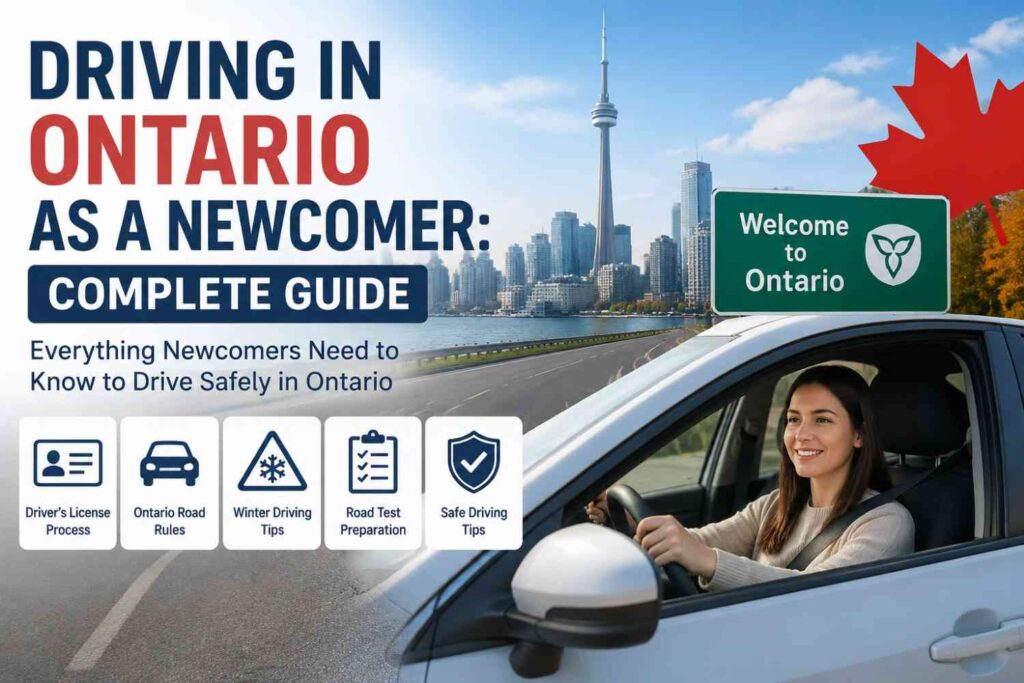
Moving to Ontario is an exciting experience, but adapting to a new road system can feel challenging for newcomers. Whether you have recently arrived in Canada, are an international student, or have years of driving experience from another country, understanding Ontario’s driving rules is essential for becoming a safe and confident driver.
As a driving instructor, I have helped many newcomers adjust to Ontario roads. The biggest difference most people notice is not only the traffic laws but also the driving habits, road signs, weather conditions, and expectations during driving tests.
This guide explains everything newcomers need to know before getting behind the wheel in Ontario.
Understanding Ontario’s Driver Licensing System
Ontario uses a Graduated Licensing System (GLS), which helps new drivers gain experience gradually before receiving a full license.
The licensing process has three main stages:
G1 License
The G1 is the first step for new drivers. It is a knowledge test that checks your understanding of:
- Ontario traffic laws
- Road signs
- Safe driving practices
- Rules of the road
After passing your G1 test, you can start learning to drive with certain restrictions.
G2 License
The G2 is the first practical driving license. To obtain it, you must pass a road test where an examiner evaluates your driving skills, including:
- Vehicle control
- Turning techniques
- Lane changes
- Parking
- Observation skills
- Following traffic rules
G License
The G license is the final stage of Ontario’s licensing system. It includes a more advanced road test that evaluates highway driving and advanced driving skills.
Can Newcomers Use Their Foreign Driver’s License in Ontario?
Many newcomers can use their foreign driver’s license for a limited period after arriving in Ontario. However, the rules depend on:
- Your country or province of origin
- Your driving experience
- Whether your country has a license exchange agreement with Ontario
If your country does not qualify for direct exchange, you may need to complete knowledge tests, road tests, and additional driving requirements.
Before driving regularly, it is important to confirm your eligibility with the Ontario licensing authority.
Why Ontario Roads May Feel Different for Newcomers
Even experienced drivers may need time to adjust to Ontario’s driving environment.
Some common differences include:
1. Strict Traffic Rules
Ontario has detailed traffic regulations, and drivers are expected to follow them carefully. Small mistakes, such as failing to check blind spots or not stopping fully at stop signs, can lead to penalties or test failures.
2. Right-of-Way Rules
Understanding who has priority at intersections is important. Many newcomers struggle with:
- Four-way stops
- Unprotected left turns
- Pedestrian crossings
- Roundabouts
Learning these rules early helps prevent dangerous situations.
3. Winter Driving Conditions
Ontario winters can be challenging, especially for drivers coming from warmer climates.
Snow, ice, freezing rain, and reduced visibility require different driving techniques. New drivers should learn:
- How to control a vehicle on slippery roads
- Safe braking techniques
- Proper following distances
- How to handle winter weather emergencies
Preparing for Driving in Milton and Mississauga
Ontario cities have different traffic patterns, and local practice is important before taking your road test.
Newcomers living in Milton should focus on residential streets, intersections, parking areas, and higher-speed roads. Professional driving lessons milton programs can help new drivers understand local road conditions and build confidence.
Mississauga has heavier traffic, busy intersections, multi-lane roads, and highway connections. Working with an experienced instructor through a trusted driving school mississauga helps learners practice real-world situations they will encounter every day.
Common Mistakes Newcomers Make While Driving in Ontario
Based on my experience as a driving instructor, these are some frequent mistakes:
Not Checking Blind Spots
Ontario examiners expect drivers to perform proper shoulder checks before:
- Changing lanes
- Turning
- Moving from a parked position
Driving Too Close to Other Vehicles
Maintaining a safe following distance is essential, especially during winter conditions.
Missing Speed Limit Changes
Speed limits can change quickly depending on the area. Drivers should always watch for posted signs.
Not Practicing Parking Enough
Parking skills are a major part of becoming a confident driver. New drivers should practice:
- Parallel parking
- Reverse parking
- Three-point turns
- Parking lot navigation
How Driving Lessons Help Newcomers Adapt Faster
Many newcomers already know how to operate a vehicle but need help understanding Canadian driving standards.
A professional instructor can teach:
- Ontario road rules
- Defensive driving techniques
- Test preparation strategies
- Local driving routes
- Safe driving habits
Learning with an instructor also helps identify habits that may be acceptable in another country but unsafe or incorrect under Ontario regulations.
Tips for Passing Your Ontario Road Test
To improve your chances of passing:
Practice Consistently
Regular practice helps develop natural driving skills and confidence.
Learn Examiner Expectations
A road test is not only about controlling the vehicle. Examiners also evaluate:
- Observation
- Decision-making
- Communication with other drivers
- Safety awareness
Stay Calm
Many failures happen because drivers become nervous and forget basic skills. Proper preparation reduces anxiety and improves performance.
Understanding Canadian Road Signs
Ontario road signs may look different from those in other countries. Newcomers should become familiar with:
- Stop signs
- Yield signs
- Speed limit signs
- No parking signs
- School zone signs
- Construction warnings
Understanding signs quickly helps drivers make safer decisions.
Final Thoughts
Driving in Ontario as a newcomer takes time, practice, and patience. The goal is not just passing a driving test but becoming a safe driver who understands Canadian road culture.
With proper training, knowledge of local traffic rules, and consistent practice, newcomers can confidently navigate Ontario roads and enjoy the freedom that comes with driving.
If you are preparing for your Ontario license, working with an experienced driving instructor can make your learning journey easier and safer.
Leave a Reply