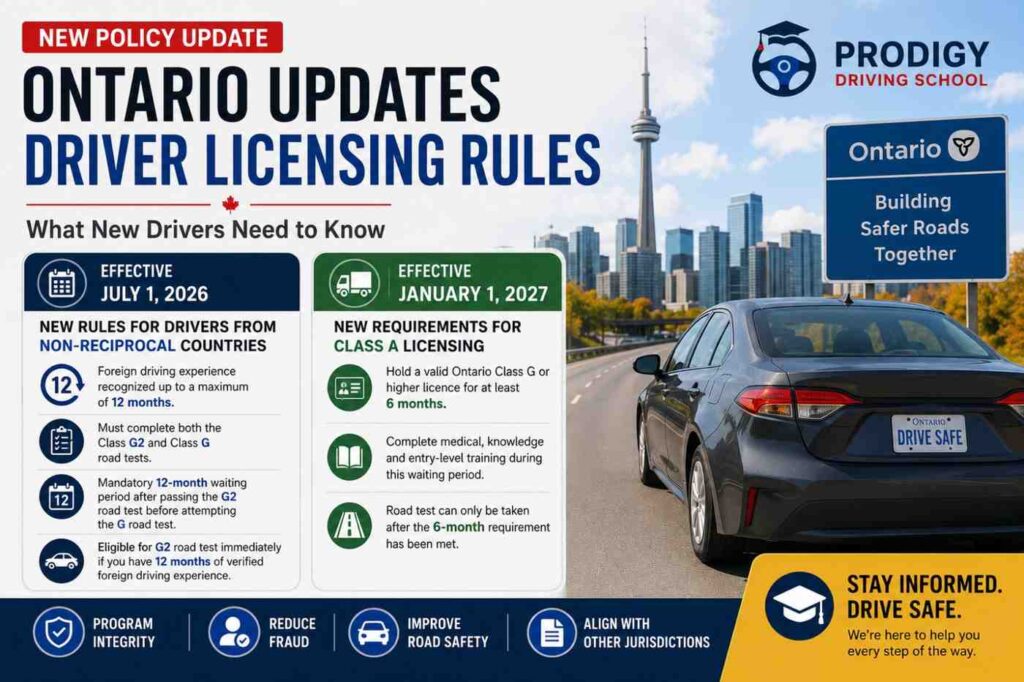
The Ontario Ministry of Transportation (MTO) has announced important changes to the province’s driver licensing system. These updates are designed to improve road safety, strengthen the integrity of Ontario’s licensing process, reduce fraud, and better align Ontario with licensing standards used in other jurisdictions.
If you’re a newcomer to Canada or currently hold a foreign driver’s licence, these changes could directly affect your journey to obtaining an Ontario driver’s licence.
In this article, we’ll explain what has changed, who is affected, and what these updates mean for future drivers.
Why Has Ontario Updated the Driver Licensing System?
According to the Ministry of Transportation, the new regulations aim to:
- Improve road safety across Ontario
- Strengthen the verification of foreign driving experience
- Reduce fraudulent licence applications
- Ensure drivers have sufficient Canadian driving experience before receiving full driving privileges
These updates introduce new requirements for drivers coming from countries that do not have a reciprocal driver’s licence exchange agreement with Ontario.
1. New Rules for Drivers from Non-Reciprocal Countries (Effective July 1, 2026)
The biggest change affects applicants who hold a driver’s licence from countries that do not have a reciprocal exchange agreement with Ontario.
Previously, verified foreign driving experience could significantly reduce the licensing process. Under the new rules, that experience is now limited.
What’s Changing?
Beginning July 1, 2026, applicants from non-reciprocal jurisdictions will:
- Have their verified foreign driving experience recognized up to a maximum of 12 months, even if they have many years of driving experience.
- Be required to complete both the Class G2 and Class G road tests.
- Complete a mandatory 12-month waiting period after passing the G2 road test before attempting the Class G road test.
- Be eligible to attempt the G2 road test immediately if they have 12 months of verified foreign driving experience. Once they pass, they may drive independently under Ontario’s graduated licensing rules.
What This Means
Even if you’ve been driving for several years in another country, you may no longer be able to bypass parts of Ontario’s graduated licensing system unless your country has a reciprocal agreement with Ontario.
This change places greater emphasis on gaining driving experience under Ontario’s road rules and conditions before obtaining a full Class G licence.
Who Is Affected?
These new requirements apply to drivers from non-reciprocal jurisdictions.
If your country has a reciprocal licence exchange agreement with Ontario, your licensing process may be different. Always check the latest information from the Ministry of Transportation or DriveTest before applying.
Why Is Ontario Introducing These Changes?
Ontario roads present unique driving conditions, including:
- Winter weather
- Busy urban traffic
- Multi-lane highways
- School zones
- Four-way stops
- Roundabouts
- Highway merging
Driving safely in Ontario requires more than years of experience elsewhere—it requires familiarity with local traffic laws, road signs, and driving expectations.
By requiring applicants to complete both road tests and spend more time gaining Ontario driving experience, the province aims to improve long-term road safety.
How Can Newcomers Prepare?
If you’re applying for an Ontario licence after July 1, 2026, preparation is more important than ever.
Here are a few recommendations:
Learn Ontario’s Driving Rules
Take time to study the Ontario Driver’s Handbook and understand local road signs, right-of-way rules, and speed regulations.
Practice Under Local Driving Conditions
Driving in Ontario may be very different from driving in your home country. Practice during:
- City traffic
- Residential neighbourhoods
- Highways
- Night driving
- Different weather conditions
Take Professional Driving Lessons
Professional instruction can help you understand what DriveTest examiners expect during both the G2 and G road tests while helping you build safe driving habits.
2. New Requirement for Class A Commercial Licence Applicants (Effective January 1, 2027)
Ontario has also announced changes for individuals planning to obtain a Class A commercial driver’s licence.
Beginning January 1, 2027, applicants must:
- Hold a valid Ontario Class G or higher licence (excluding G1, G2, M1, M2, or M licences) for at least six months before taking the Class A road test and receiving a Class A licence.
- Complete the required medical, knowledge, and entry-level training during this waiting period.
- Complete the Class A road test only after the six-month waiting requirement has been met.
Equivalent driving experience from other Canadian jurisdictions may count toward the waiting period where applicable.
The goal is to ensure commercial drivers have sufficient on-road experience before operating large commercial vehicles.
How These Changes Affect New Drivers
For most Ontario residents beginning with a G1 licence, the graduated licensing process remains the same.
However, newcomers and foreign licence holders should expect a more structured path to obtaining a full Ontario licence if they are from a non-reciprocal country.
Planning ahead and understanding the new requirements can help avoid delays and unexpected surprises.
How Prodigy Driving School Can Help
At Prodigy Driving School, we understand that Ontario’s licensing rules can sometimes be confusing, especially for newcomers and internationally experienced drivers.
Our experienced instructors can help you:
- Prepare for the G2 road test
- Build confidence driving on Ontario roads
- Learn local traffic laws and road signs
- Practice highway, city, and defensive driving
- Prepare for your Class G road test when eligible
Whether you’re a new driver or transitioning from an overseas licence, our goal is to help you become a safe, confident, and knowledgeable driver.
Final Thoughts
Ontario’s latest driver licensing updates reinforce one important message: safe driving comes through proper training and local driving experience.
If you’re applying for an Ontario licence after July 1, 2026, make sure you understand how these new rules apply to your situation. Preparing early, practicing consistently, and learning from qualified instructors will make your licensing journey smoother and increase your confidence on Ontario’s roads. As more details and implementation guidance become available, Prodigy Driving School will continue sharing updates to help students stay informed and prepared.
Leave a Reply